 Back
BackThe Trust Layer in AI Avatars: UX Secrets Behind High-Conversion Video Interfaces
#VideoAI #AIAvatars #SyntheticMediaUX #MultilingualAI #TECHVEDAI

Jay Anthony
13 April 2026 | 6 min read
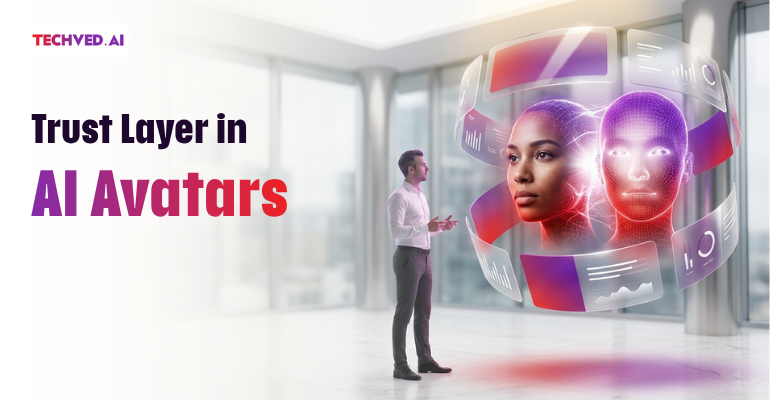
Have you ever hesitated before clicking a chatbot icon, wondering if you would get a helpful response or a frustrating loop? In today's digital-first world, this trust is the invisible currency that drives engagement and conversion. This is especially true for Video AI interfaces featuring AI avatars. While the technology behind these digital beings is astounding, their true power lies in their ability to build genuine trust with users.
For businesses, the challenge is clear: how do you create AI avatars for customer engagement that feel authentic and reliable, not robotic or uncanny? The answer lies in understanding the subtle yet profound UX secrets that establish a robust 'trust layer' in every synthetic media UX interaction. Video AI solutions are not just about visual fidelity; they are about crafting an experience that resonates on a human level.
What Is the Trust Layer in Video AI?
The trust layer is the set of UX design principles and technical standards that determine whether a viewer perceives an AI avatar as credible, safe and worth engaging with. It sits between the AI avatar platform that generates the video and the human being watching it.
Synthetic media UX requires rethinking conventional design. Trust in AI avatars for customer engagement is not built through photorealism alone. It is built through the accumulation of micro-signals: eye contact, voice cadence, lip synchronization, contextual relevance and ethical disclosure. When any one of these signals is absent or misaligned, cognitive trust breaks down instantly.
Four UX Secrets Behind High-Conversion Avatars
1. Visual Authenticity Through Imperfection
Perfect symmetry and flawless skin symbolize artificiality. Leading video AI solutions introduce subtle micro-movements: occasional blinks, small head tilts and natural gaze shifts. These imperfections reflect humanity, not error.
2. Voice Naturalness Over Clarity
Overly polished synthetic voices trigger distrust. The trust layer adds natural pauses, slight breath sounds and varied intonation. A multimodal video AI system synchronizes lip movements with these vocal nuances for seamless realism.
3. Radical Transparency
Disclosure always builds trust. Avatars that clearly state "I am an AI assistant" at first contact earn more engagement than those that hide their nature. Customers appreciate honesty and they feel respected.
4. Cultural and Contextual Adaptation
A multilingual AI avatar must adapt beyond language. Gestures, personal space and formality levels vary across cultures. The trust layer embeds these nuances. A Japanese avatar bows slightly. An Italian avatar uses more hand gestures. This depth of adaptation comes from sophisticated AI avatar platform design.
The Ethics-Experience Connection
Synthetic media ethics directly impacts UX. Customers sense when avatars are designed to deceive. A trust layer built on ethical principles includes:
- Clear opt-out options for avatar interactions
- Persistent disclosure of synthetic nature
- No hidden data collection through facial analysis
- Human escalation paths for sensitive topics
Enterprises that prioritize ethical design see higher long-term engagement. Customers reward transparency with loyalty.
How Video AI Platforms Build Trust at Scale
Modern AI video platform architecture supports trust through several mechanisms:
- Real-time feedback loops: Avatars adjust their tone based on customer sentiment detected through text or voice.
- Consistent identity: The same avatar persona appears across web, mobile and support channels building recognition and comfort.
- Fallback transparency: When the avatar cannot answer, it transparently escalates to a human without pretending to understand.
- Performance analytics: Platforms track trust metrics like hesitation time, dropout rate before first interaction and repeat usage.
The Business Case for Trust-First Design
High-conversion video interfaces deliver measurable ROI. Trustworthy AI avatars for customer engagement reduce abandonment, increase task completion, and drive repeat interactions.
Conversely, trust failures are expensive. Customers who feel misled by an avatar rarely return. The cost of rebuilding trust far exceeds the investment in getting UX right from the start.
Implementing Your Trust Layer
Building trustworthy avatars requires specialized expertise in both Video AI and human psychology. Generic implementation misses the subtle cues that drive comfort and conversion.
TECHVED.AI brings deep experience in synthetic media UX and AI avatar platform design. Our video AI solutions embed trust at every layer: visual, vocal, ethical and cultural. We help enterprises deploy AI avatars for multilingual engagement that customers genuinely want to interact with.
Ready to build avatars that convert? Partner with TECHVED.AI to create trust-driven video interfaces.
FAQs
What is the trust layer in Video AI?
The trust layer is the UX architecture combining visual realism, behavioral authenticity and ethical transparency that makes users comfortable engaging with AI avatars for customer engagement.
What is synthetic media UX?
Synthetic media UX refers to the design principles that govern how AI-generated video and avatar content is presented to human viewers. It determines how effectively Video AI solutions build perceived credibility, including how an AI avatar platform handles disclosure, realism and personalization.
How does synthetic media UX impact conversion?
Synthetic media UX directly influences conversion by triggering mirror neurons, reducing cognitive load and creating parasocial relationships that drive action.
Why are multilingual AI avatar implementations important?
AI avatars for multilingual engagement eliminate language barriers while maintaining cultural nuance. They expand addressable markets without multiplying production costs.
What role do synthetic media ethics play in avatar design?
Ethical frameworks build user confidence. When audiences trust the AI is transparent and respectful of their data they engage more authentically and convert at higher rates.
Most Popular
How AI-Driven Video Content Is Revolutionising Business Communication
Synthetic Media Ethics: Maintaining Authenticity in the Age of Avatars
Why AI Is No Longer Optional for the Insurance Industry in 2026

Green AI for Enterprises: Building Energy-Efficient Intelligence at Scale
From Clicks to Conversations: How Video Messaging Is Replacing Traditional Funnels
Introducing HOLA VDA: The Future of Humanized AI Conversations
Digital Literacy 2.0: Navigating the Shift from Text to Video-First Communication
Written By
Jay Anthony
Marketing Manager | TECHVED Consulting India Pvt. Ltd.
Jay Anthony holds expertise across a broad range of tech and innovation sectors. Driven by a passion for exploring ideas and sharing insight, Jay aims to craft work that is thoughtful, engaging and accessible. Whether diving into new subjects or reflecting on familiar ones, the goal is always to connect with readers and offer something meaningful.

Stay up-to-date with
all new market trends and
happenings
 #AIVideoContent #AIInBusiness #BusinessCommunication
How AI-Driven Video Content Is Revolutionising Business Communication
#SyntheticMedia #AIEthics #DigitalHumans #AIAvatars
Synthetic Media Ethics: Maintaining Authenticity in the Age of Avatars
#AgenticAI #InsuranceTech #AITrends2026 #InsuranceInnovation
Why AI Is No Longer Optional for the Insurance Industry in 2026
Ready To Transform?
Automate smarter. Create faster. Grow with AI.